
The hours between the school bell and bedtime can feel like pure chaos—homework battles, endless snack requests, and screen-time negotiations that leave everyone drained. If you’re searching for practical after school routine ideas that actually work in real life, you’re in the right place. This guide offers a clear, step-by-step blueprint to transform those stressful afternoons into calm, predictable rhythms. Rooted in proven child development principles and real-world parenting experience, these strategies are designed to be simple, flexible, and effective—so you can create smoother afternoons starting today.
Why Structure is a Superpower for Kids (and Parents)
Structure simply means a predictable plan for the day—knowing what happens and in what order. It sounds basic (almost boring), but it’s powerful.
Reduces Decision Fatigue
Decision fatigue is the mental exhaustion that comes from making too many choices. Kids feel it. Parents definitely feel it. A set flow—like consistent after school routine ideas—cuts down on daily negotiations and power struggles.
Fosters Independence
Routines teach time management, or the ability to use time wisely. When children know they unpack, snack, then start homework, they rely less on reminders. That builds real confidence.
Creates Security
Predictability answers a child’s constant question: “What comes next?” That sense of safety lowers anxiety and often improves behavior.
The Developmental Edge
Structure strengthens executive function—skills like planning and task initiation (starting without being told three times). According to Harvard’s Center on the Developing Child, consistent routines support these brain-based skills.
Pro tip: Try how to design a weekly family meeting that actually works to reinforce structure at home.
The Four Pillars of a Perfect After-School Flow
If your afternoons feel chaotic, here’s my clear recommendation: stop winging it. Build your day around four predictable pillars and protect them like appointments.
Pillar 1: The Landing Zone (Decompression)
The first 30 minutes matter most. Kids experience “transition fatigue” (mental exhaustion after shifting environments). Offer a healthy snack and quiet downtime—drawing, music, or simply zoning out. Avoid homework immediately (yes, even if they insist they “just want to get it over with”).
Protect this buffer fiercely. It reduces meltdowns later.
Pillar 2: The Power Hour (Responsibilities)
Create one clearly defined block for homework, chores, and packing tomorrow’s bag. Try the Pomodoro Method for kids: 25 minutes of focused work, 5-minute break. Research shows time-blocking improves task completion and focus (American Psychological Association).
Recommendation: Keep this hour distraction-free—no TV humming in the background (it’s sneakier than you think).
Pillar 3: The Green Zone (Play & Connection)
Free play isn’t a reward; it’s fuel. The CDC notes children need at least 60 minutes of physical activity daily for optimal health. Schedule outdoor play, board games, or family talk time.
When searching for after school routine ideas, prioritize this pillar. Play builds executive function (Harvard Center on the Developing Child)—which ironically improves homework performance.
Pillar 4: The Wind-Down (Evening Prep)
Use the final 15–20 minutes before bedtime prep to tidy play spaces and lay out clothes. Future-you will be grateful (mornings are ruthless).
| Pillar | Focus | Time Frame |
|——–|——–|————|
| Landing Zone | Snack + Decompress | 30 min |
| Power Hour | Homework + Chores | 60 min |
| Green Zone | Play + Connection | 60+ min |
| Wind-Down | Prep for Tomorrow | 20 min |
Follow this structure consistently. Predictability creates calm—and calm creates cooperation.
One Size Doesn’t Fit All: Sample Routines by Age
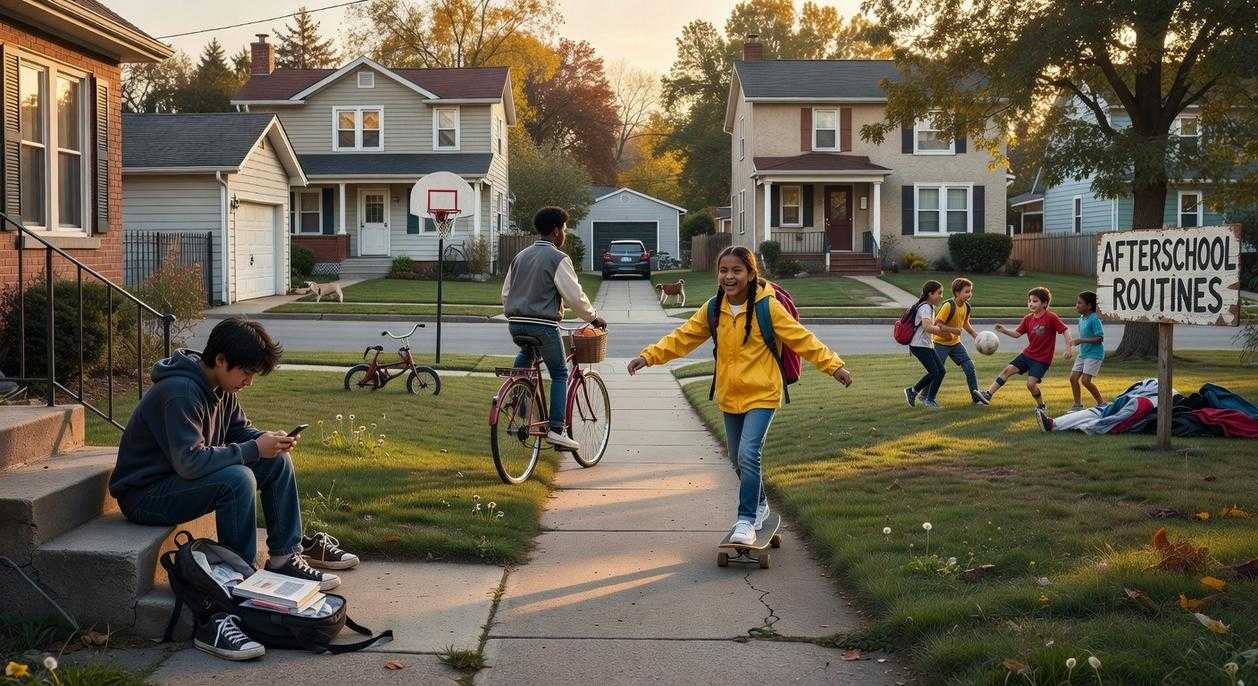
When it comes to building structure at home, one size rarely fits all (despite what that color-coded planner on Pinterest promises). Children experience time differently at each stage of development, so routines should match their cognitive and emotional growth.
Ages 5–7: Keep It Visual and Tangible
At this age, abstract time feels slippery. A picture-based chart—like a bright drawing of a book for reading time—gives routines something they can see and almost touch. Tasks should be short enough that attention doesn’t drift with the hum of the refrigerator or the dog barking outside. For example: 15 minutes snack and chat (apple slices crunching at the table), 20 minutes free play, 15 minutes “helper chore,” and 20 minutes reading together under a soft lamp.
Some argue young kids should “just relax” after school without structure. And yes, downtime matters. But light structure actually reduces meltdowns by setting clear expectations (American Academy of Pediatrics notes that predictable routines support emotional regulation). Think of it as gentle guardrails, not a strict schedule.
Ages 8–10: Growing Independence
Now you can introduce autonomy. Let them choose the order of their “Power Hour” tasks on a whiteboard checklist. The squeak of the marker and the satisfying swipe of erasing build ownership. A sample flow: 30 minutes snack and unwind, 45-minute homework block, 15-minute chore, then free time or electronics until dinner.
Some parents worry this flexibility invites procrastination. Fair point. However, guided choice teaches decision-making—a core executive function skill (Harvard Center on the Developing Child). Pro tip: set a visible timer to keep momentum steady.
Ages 11–13: Collaborative Planning
Pre-teens crave input. Sit down together, review activities, and map out priorities. Balance schoolwork, social time, and hobbies so evenings don’t feel rushed or chaotic. This is where after school routine ideas evolve into time-management training.
Yes, they may resist at first (cue dramatic sigh). Still, collaboration builds accountability—and that’s a skill that lasts far beyond middle school.
Parenting Hacks for Making Your New Routine Stick
Hack #1: Co-Create the Schedule
Sit down for a quick family meeting and build the plan together. Buy-in (a sense of shared ownership) increases follow-through—research shows kids are more cooperative when they feel heard (APA, 2020). Let them help choose after school routine ideas so it’s not a top-down decree (nobody likes a tiny dictator).
Hack #2: Be Consistent, Not a Robot
Aim for 80% follow-through. Consistency builds habits; perfection builds stress. Life happens.
Hack #3: Use Timers
- Set a visual timer for transitions
- Let it be the “time police”
- Praise quick switches
(Pro tip: Celebrate small wins.)
Reclaiming Your Afternoons, One Step at a Time
You came here looking for practical after school routine ideas, and now you have a complete toolkit—from foundational principles to age-specific templates you can actually use. The daily scramble of backpacks, snacks, homework battles, and overtired meltdowns doesn’t have to define your afternoons anymore. That chaos is exhausting, and it steals the calm your family deserves.
A predictable, structured routine creates smoother transitions, more independent kids, and a home that feels steady instead of stressful.
Start small tonight. Pick just one pillar—like setting up a simple “Landing Zone”—and put it in place. One focused step can change the entire tone of your afternoon.