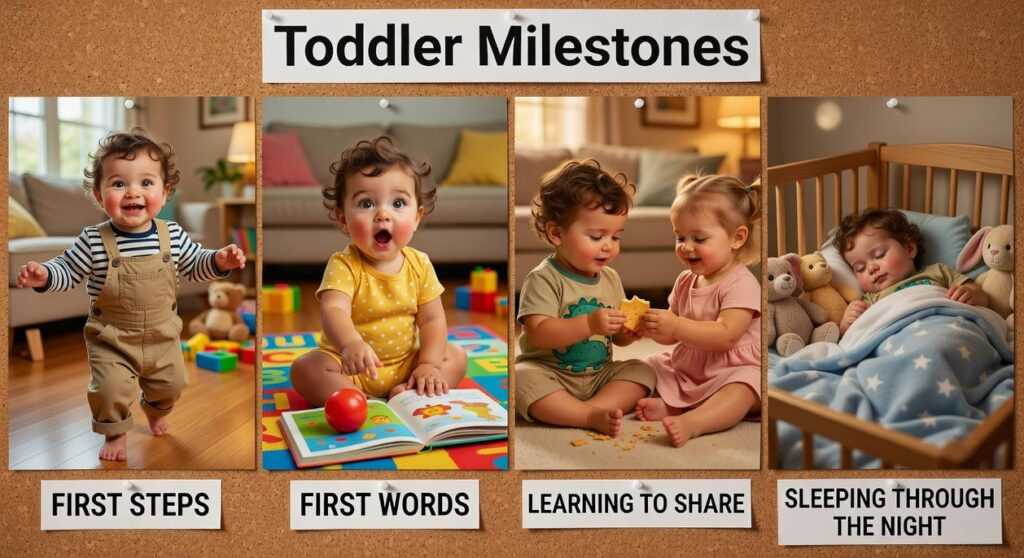
The first five years of your child’s life are filled with breathtaking growth, discovery, and change. Yet with so many charts, checklists, and opinions out there, it’s easy to feel unsure about what truly matters. This guide simplifies the journey by breaking down developmental milestones birth to five into clear, practical stages—covering physical, cognitive, social, and language development. Instead of overwhelming you with jargon, we translate developmental science into everyday insights you can actually use. Whether you’re celebrating first steps or first sentences, you’ll gain a confident understanding of what to expect and how to support your child every step of the way.
The First Year: From Newborn Reflexes to First Steps
The first year is a whirlwind of growth (blink and you might miss it). Physically, babies transform from tiny bundles with reflexive movements into determined explorers. Gaining head control, rolling over, sitting unassisted, crawling, pulling to stand, and those wobbly first steps all build strength and coordination. The benefit for you? Each milestone signals muscles and motor skills developing right on track—confidence you’re supporting healthy progress.
Cognitive and sensory skills bloom just as quickly. Babies track objects, recognize familiar faces, respond to their name, and begin grasping object permanence—the understanding that something exists even when out of sight. This foundation strengthens memory and problem-solving, key pieces of developmental milestones birth to five.
Socially, those first smiles melt hearts for a reason. Attachment to caregivers builds emotional security, which research links to healthier stress responses later in life (Harvard Center on the Developing Child). Stranger anxiety? A sign they know who their safe people are.
Language begins with coos, grows into babbling, and often becomes simple words by one year. Every sound is practice for future conversations.
Parenting Pulse Tip: Tummy time isn’t just play—it’s a daily workout powering every physical leap ahead.
The Toddler Takeover: Walking, Talking, and Exploring (Ages 1–2)
If infancy is about surviving, toddlerhood is about movement and momentum. Between one and two, mobility explodes. Walking turns into running, couches become mountains, and block towers rise (and crash) in seconds. According to the CDC, most toddlers walk independently by 18 months and begin climbing soon after (CDC, 2023).
A vs. B: Restricting vs. Preparing the Environment
- A: Constantly saying “no.” Leads to frustration (for both of you).
- B: Creating a “yes space.” A fully childproofed area where exploration is safe and encouraged.
Cognitively, toddlers shift from passive observers to active problem-solvers. They follow one-step commands like “bring me the ball” and begin pretend play—feeding a doll or “calling” grandma on a block (future method actor energy). These moments align with developmental milestones birth to five and signal growing memory and symbolic thinking.
Socially, it’s the classic “me do it” phase. Independence builds confidence—but also tantrums. Some argue strict control prevents meltdowns. Research suggests guided autonomy builds resilience instead (American Academy of Pediatrics, 2022).
Language sees a dramatic leap: from a few words to 50+, even simple two-word phrases like “more milk.”
Pro tip: Narrate daily routines. Repetition fuels vocabulary growth faster than flashcards (Harvard Center on the Developing Child).
The “Two-Year-Old”: Language Explosions and Growing Independence (Ages 2–3)
Between ages two and three, children often experience a language explosion—a rapid increase in vocabulary and sentence length (yes, this is when the nonstop “why?” begins). Physically, coordination improves: they run, jump, kick a ball, and may start pedaling a tricycle. Fine motor skills sharpen as they turn book pages one at a time.
Meanwhile, cognitive growth becomes visible. Sorting shapes and colors, completing simple puzzles, and asking endless questions signal emerging problem-solving skills. These abilities connect directly to broader developmental milestones birth to five, building the foundation for preschool learning.
Socially, routines offer security. Although some argue toddlers should “learn flexibility early,” predictable schedules actually reduce meltdowns by lowering uncertainty. Clear meal and bedtime rhythms help them feel safe.
So what’s next? Encourage curiosity through play-based learning. Activities explained in how play supports cognitive development in early childhood can strengthen thinking skills while preserving that growing independence.
The Preschool Years: Imagination, Friends, and Fine Motor Skills (Ages 3-4)
Between ages three and four, growth feels almost magical. Have you ever watched your child carefully cut paper with child-safe scissors or proudly hop on one foot and thought, When did that happen? Fine motor skills surge forward during this stage. Many preschoolers can draw circles and squares, dress themselves (buttons still put up a fight), and even catch a bounced ball.
At the same time, imagination reigns supreme. One minute they’re a firefighter, the next a dinosaur running a bakery. This make-believe play strengthens storytelling and helps them understand simple ideas about “yesterday” and “tomorrow.” These moments connect directly to developmental milestones birth to five, laying foundations for school readiness.
Socially, a big shift unfolds. Instead of playing side by side, they begin cooperating, sharing, and taking turns. Sound familiar?
Parenting Pulse Tip: Offer open-ended toys like blocks or dress-up clothes. Simple tools spark far more creativity than flashing screens (and yes, fewer batteries required).
Between ages four and five, change happens fast—sometimes in a single school year. In six months, children go from wobbly skipping attempts to playground pros (yes, like tiny Olympians). Physically, they handle forks, buttons, and bathroom routines solo. Cognitively, pre-academic sparks fly: recognizing letters, counting past 10, and following three-step directions without reminders. Socially, friendships feel epic and rules make sense.
Some argue kids should “just play” and skip structure. But research from the CDC shows guided routines boost school readiness.
Household Hack:
- Count groceries, spot sign letters, and sequence getting dressed.
These developmental milestones birth to five matter.
Embracing Each Unique Stage of Growth
You came here to better understand your child’s journey, and now you have a clearer picture of the developmental milestones birth to five and what they truly mean. While milestones matter, the real challenge is not comparing, worrying, or rushing the process. Every child develops at their own pace—and that’s exactly how it should be.
When you focus on connection over checklists, you create the safe, loving environment your child needs to thrive. Celebrate progress, stay attentive to concerns, and trust the process.
If you want practical, real-life parenting guidance trusted by thousands of growing families, explore more of our expert-backed resources today and start supporting your child with confidence.