

If you feel like you’re constantly reacting instead of truly parenting, you’re not alone. Between homework, meals, activities, and endless to‑dos, it’s easy to end each day exhausted—and still wishing you had more meaningful moments with your kids. The problem isn’t that you’re not trying hard enough. It’s that your days aren’t designed with intention. After guiding hundreds of families toward calmer, more connected homes, we’ve found one simple shift makes the biggest difference: time blocking for parents. In this guide, you’ll learn how to use your calendar not just to manage tasks, but to reduce stress and create real quality time.
The Myth of “Finding” Time vs. The Power of “Making” Time”
The Reactive Trap
By implementing time blocking techniques, busy parents can create structured schedules that not only enhance productivity but also free up precious moments for family fun and activities, much like the engaging parenting strategies outlined in our article on Llblogkids.
Many parents believe they’ll find time later. However, later rarely shows up. Instead, you end up multitasking during dinner, replying to emails during homework, and collapsing into bed wondering what you actually accomplished. This reactive approach fuels decision fatigue—the mental exhaustion that comes from making too many small choices (a concept widely studied in behavioral psychology; see Baumeister et al., 1998). Consequently, you feel perpetually behind.
Some argue flexibility is better. After all, kids are unpredictable. True—but without structure, unpredictability turns into chaos. Waiting for a “free moment” is like waiting for laundry to fold itself.
The Proactive Advantage
By contrast, scheduling parenting tasks like meetings creates a psychological shift. When homework help sits on your calendar, it’s non-negotiable. This is where time blocking for parents changes the game. You decide in advance:
- When you’ll help with assignments
- When one-on-one play happens
- When household resets occur
As a result, there’s less scrambling and more intention.
The Emotional Payoff
Most importantly, scheduling reduces guilt. If playtime is already planned, you can focus fully on work—then fully on family. That presence is the real win.
So what’s next? Start small. Pair structured evenings with systems like creating a morning routine that works for the whole family to anchor your day from both ends.
The “Parenting Block” Method: A Step-by-Step Guide
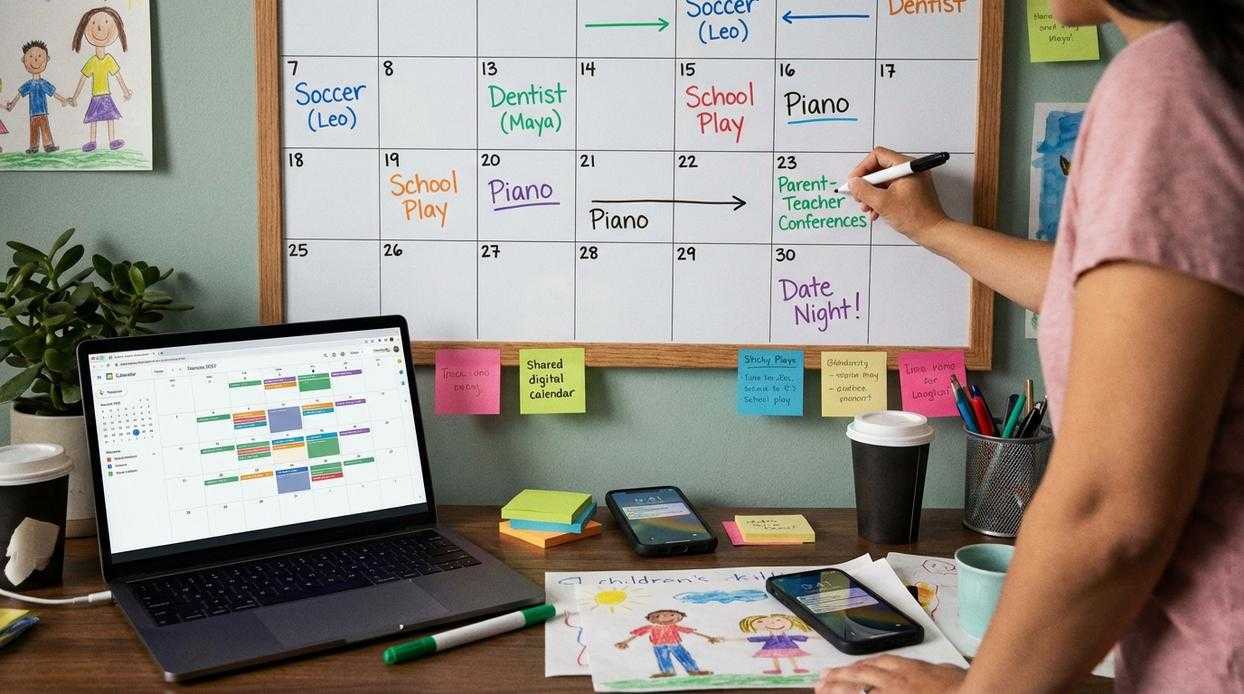
If parenting sometimes feels like playing whack-a-mole with responsibilities, you’re not alone (and no, you’re not “bad at organization”). Research from the American Psychological Association shows that 66% of parents report stress related to managing time and responsibilities. The Parenting Block Method tackles that stress with structure.
Step 1: The Responsibility Audit
Start with a Responsibility Audit—a complete inventory of recurring parenting tasks. Write everything down, then sort into categories:
- Household Management: meal planning, laundry, grocery lists
- Child Admin: school forms, permission slips, medical appointments
- Academic Support: homework help, reading practice
- Connection: one-on-one time, family game night
This creates visibility. A 2012 study in Psychological Science found that simply externalizing tasks (writing them down) reduces cognitive load and improves follow-through.
Step 2: Batch and Assign
Next, use task batching—grouping similar tasks into one scheduled block. Instead of reacting to paperwork daily, create a 15-minute Child Admin block twice a week. Productivity research from the University of California, Irvine shows it can take over 20 minutes to refocus after interruptions. Batching minimizes that reset time.
Some argue parenting is too unpredictable for structure. Fair point—kids aren’t calendar-friendly. But batching doesn’t remove flexibility; it reduces chaos. (Think less “military schedule,” more “gentle guardrails.”)
Step 3: Calendar Time Blocking
Now apply time blocking for parents. Use a digital or paper calendar to schedule just two or three blocks per week to start. Habit research from University College London suggests repetition in consistent contexts builds automaticity over time.
Example Schedule Snippet:
Tuesday: 4:30–5:00 PM – Homework Help Block
7:00–7:30 PM – Family Reading Time Block
9:00–9:15 PM – Parent Admin Block (pack lunches, sign forms)
Pro tip: Treat these blocks like appointments—you wouldn’t casually cancel a dentist visit. Consistency compounds, and structure creates calm.
Beyond Chores: Scheduling for Deeper Connection
Last Tuesday, I almost skipped our nightly chat because the dishes were stacked like a losing game of Jenga. Instead, I set a 15-minute timer and sat on my son’s floor while he explained Minecraft strategies in intense detail. Nothing monumental happened—yet everything did. He went to bed lighter. So did I.
That’s the heart of “Connection Blocks”—short, intentional windows of one-on-one, phone-free time. Think of them as protected appointments with your child. Research from the Harvard Center on the Developing Child shows consistent, responsive interaction strengthens emotional security and resilience (Harvard University, 2020). In practice, this can look like 10–15 minutes daily or a few times weekly.
Some argue scheduling connection feels forced. I used to think so, too. But if meetings make the calendar, why not relationships? Using time blocking for parents ensures connection doesn’t get squeezed out by errands.
Protecting Your Time
Tell your family: “This is our special time.” Over time, interruptions drop because expectations are clear (and kids notice what you prioritize).
The Power of “Do Nothing” Blocks
Equally important is scheduled downtime. Free Play or Family Hangout prevents burnout and invites spontaneity.
| Block Type | Example | Benefit |
|---|---|---|
| Connection | 7:30 PM chat |
Emotional bonding |
| Free Play | Saturday 3 PM | Creativity + rest |
Some days unravel fast—the baby’s cry pierces the quiet, coffee goes cold, and your neat plan smudges like wet ink. When that happens, treat your schedule as a guide, not a rulebook. Try a 10-Minute Tidy or a Weekly Reset to clear counters, silence buzzing notifications, and breathe. If you and your partner clash, set a shared digital calendar and a 15-minute family sync; hear the relief in each other’s voices when expectations align. Think it feels restrictive? Structure creates space. Use time blocking for parents to trade mental clutter for calm, steady momentum. Freedom hums in orderly mornings. Brightly.
Designing Your Family’s Rhythm, One Block at a Time
You came here looking for a way to move from constant reaction to intentional action—and now you have a clear, practical framework to do exactly that. The daily chaos, the endless mental load, and the feeling of always being “on” can drain even the most devoted parent. But with time blocking for parents, you’re no longer leaving connection and calm to chance. By proactively scheduling dedicated blocks—especially for meaningful connection—you create structure that supports presence instead of pressure.
Now take the first step: open your calendar and schedule one 15-minute “Connection Block” for tomorrow. That small action can begin transforming your family’s rhythm.