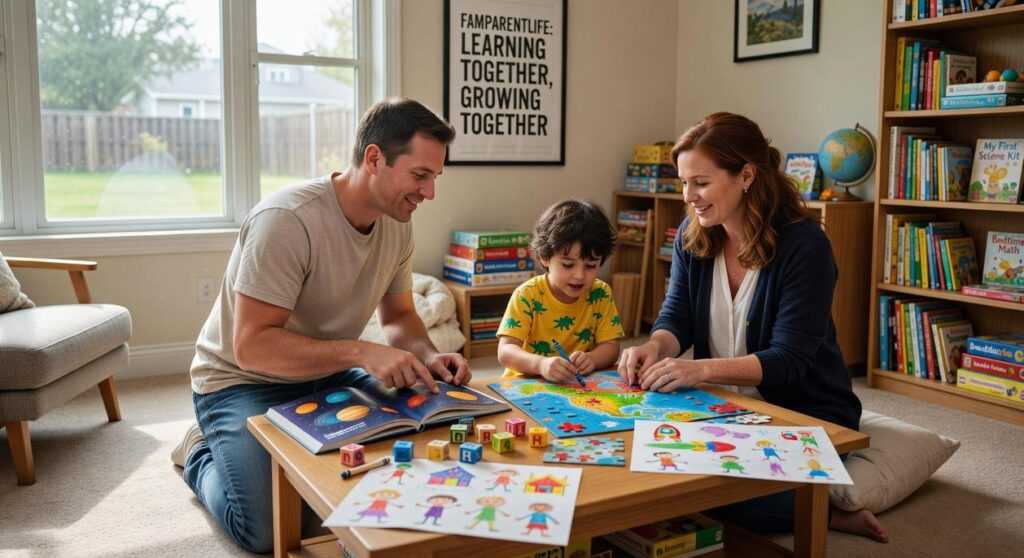
I know you’re tired of turning every moment with your kid into a lesson plan.
You want to help them learn and grow. But the worksheets feel forced. The educational apps lose their appeal after a week. And honestly, you’re just trying to get through the day without adding more pressure.
Here’s the thing: the best learning happens when it doesn’t feel like work.
I’ve spent years watching what actually works in real households. Not the Pinterest-perfect setups. The stuff that happens between dinner and bedtime when everyone’s a little tired but you still want to connect.
This article gives you learning activities that don’t require a teaching degree or a craft closet. Just simple ideas you can pull out when you have 10 minutes or an hour.
We base everything at famparentlife on what actually fits into busy family life. Real routines. Real constraints. Real kids who don’t always cooperate with your plans.
You’ll walk away with activities that build skills your child needs while making memories you’ll both remember.
No prep work that takes longer than the activity itself. No guilt about doing it wrong.
Just you and your kid, learning together in ways that actually feel good.
The Kitchen Classroom: Simple STEM for Curious Kids
You don’t need fancy kits or expensive materials to teach your kids science.
Your kitchen already has everything you need.
I know some parents think real STEM learning requires special equipment or structured lessons. They worry that homemade activities are just messy playtime that won’t actually teach anything meaningful.
I used to think that way too.
But here’s what changed my mind. Kids learn best when they’re touching things and seeing results happen right in front of them. A $50 science kit that sits in the box doesn’t beat a bowl of water and some random household items.
Let me show you what I mean.
The Sink or Float Challenge
Grab a bowl and fill it with water. Then collect whatever small items you can find. A spoon, a grape, a plastic lid, maybe a crayon.
Before you drop anything in, ask your child what they think will happen. Will it sink or float?
Let them test each one. They’ll start noticing patterns pretty quickly (and they’ll probably want to test everything in your house after this).
This is how you introduce density without ever saying the word density.
Fizzy Color Mixing
Get an ice cube tray or a few small bowls. Put a spoonful of baking soda in each section.
Mix some vinegar with food coloring in separate cups. Hand your child a dropper or spoon and let them add the colored vinegar to the baking soda.
The fizzing reaction gets them every time. Plus they’re seeing how colors combine while watching a real chemical reaction.
These learning activities famparentlife don’t require prep time or cleanup that’ll make you regret your choices. Most of what you need is already in your pantry.
Why This Actually Works
Your child isn’t just playing around. They’re learning to observe, predict, and test their ideas. That’s the foundation of scientific thinking.
And honestly? They’ll remember this way more than any worksheet.
Building Word Worlds: Everyday Literacy Games
You don’t need flashcards or workbooks to build your kid’s language skills.
I’m serious. Some of the best literacy work happens when you’re just hanging out together.
The real win here? Your child learns to love words before they even realize they’re learning. And that sets them up for reading success later on.
Activity 1: The Story Chain
Start a story with one sentence. Something like “Once upon a time, there was a purple squirrel who loved to dance.”
Then each person adds a sentence.
Your kid builds narrative skills without even knowing it. They learn how stories flow and how to think creatively. (Plus you’ll get some pretty wild tales out of this.)
Activity 2: I Spy with Sounds
Forget colors. Spy something that starts with a specific sound instead.
“I spy with my little eye, something that starts with the ‘buh’ sound.”
Ball. Book. Banana.
This game builds phonemic awareness, which is what kids need before they can decode words on a page. You can play it anywhere. The car. The grocery store. Waiting rooms.
Household Parenting Hack
Grab some sticky notes and label common items around your house. Door. Table. Chair. Window.
Your kid sees these words dozens of times a day. They start recognizing them without trying. That’s sight word recognition happening naturally while they’re just living their life.
Want more learning activities famparentlife? Check out famparentlife for practical ways to weave learning into your everyday routines.
Real-World Numbers: Making Math Part of Your Routine

Last Tuesday, my kid asked me why we even need math.
We were standing in the cereal aisle and she was convinced that numbers were just something teachers made up to torture children.
I get it. When you’re staring at a worksheet full of problems, math feels pointless.
But here’s what I’ve learned. Math isn’t hiding in textbooks. It’s in every room of your house and every errand you run.
Some parents say you should keep learning separate from daily life. They think kids need dedicated study time at a desk with proper materials. And sure, focused practice has its place.
But that approach misses something important.
Kids learn best when they don’t realize they’re learning.
When my daughter counts apples at the store, she’s not doing homework. She’s helping me shop. But her brain is making the same connections it would during a math lesson (maybe better ones because she can actually touch what she’s counting).
Here’s how I work numbers into our regular routine.
Grocery Store Math
In the produce section, I ask my kid to count out three red apples or find the biggest potato. For older kids, they can help compare prices or weigh items on the scale. This connects abstract numbers to things they can hold.
My daughter used to think “three” was just a word. Now she knows it means three actual objects in the bag.
Laundry Sorting
As you do laundry, have your child help sort clothes by color, by family member, or by type. Socks, shirts, pants. Count the items in each pile.
This teaches categorization and sorting. It’s also one-to-one correspondence without the fancy term.
(Plus, I get help with laundry. Win-win.)
The Helper Job Approach
I frame these as important helper jobs. Not learning activities famparentlife or secret lessons.
When kids feel like they’re contributing to the family, they pay attention differently. They want to get it right because it matters.
My kid takes her apple-counting job seriously. Way more seriously than any worksheet I’ve ever handed her.
Does this replace formal math practice? No.
But it builds the foundation that makes formal practice actually make sense.
Creative Minds, Busy Hands: Art & Motor Skill Fun
Your kid needs to move their hands. A lot.
That’s how they build the muscles they’ll need for writing, buttoning shirts, and using scissors later on.
But here’s what I see parents do. They buy expensive craft kits that promise to teach fine motor skills. Then those kits sit in the closet because they’re too complicated or too messy.
You don’t need that.
What you need are simple projects that let your kids create something while strengthening their hands. The kind of active learning activities famparentlife is built around.
Activity 1: Nature’s Collage
Take a walk outside. Let your kid collect leaves, twigs, petals, and small stones. When you get home, give them cardboard and glue.
That’s it.
They’ll arrange everything into their own piece of art. The picking up of small objects works their pincer grip. The gluing builds hand strength.
Activity 2: DIY Playdough
Mix 1 cup of flour with 1/2 cup of salt and 1/2 cup of water. You just made playdough.
Your kid will knead it, roll it, and shape it. All of that strengthens the exact hand muscles they need for holding a pencil.
Both projects are low mess and let your kid express themselves while building real skills.
Connecting Through Curiosity and Play
We’ve covered how you can turn everyday moments into powerful learning opportunities.
From the kitchen to the laundry room, your home is already set up for this. You don’t need special materials or lesson plans.
I know the pressure to be a formal teacher can feel heavy. But here’s the truth: the best learning happens through shared experiences that feel natural and joyful.
These activities work because they tap into what kids already want to do. They’re curious by nature. When you meet them there, critical skills develop without force or stress.
It becomes connection instead of curriculum.
Your next step is simple. Pick one learning activities famparentlife approach from this guide and try it this week.
Just one.
Watch what happens when learning stops feeling like work and starts feeling like play. You’ll see your child engage differently, and you’ll feel the shift too.
The moments are already there. You’re just giving them purpose now. Homepage. Advice Famparentlife.